
Delicious Greek Potato Salad with Feta You’ll Love to Make
Last Updated on March 13, 2026 by Miguel
There’s nothing quite like the vibrant flavors of the Mediterranean to awaken your palate, and this Greek Potato Salad is a perfect example. Picture biting into tender, creamy baby potatoes mingling with salty feta and briny Kalamata olives, all tossed together with a zesty dressing that whispers of sun-soaked summer days. I first stumbled upon this delightful recipe during a picnic with friends, and it quickly became a crowd favorite.
Whether you’re looking to bring a refreshing side dish to your next barbecue or want something light yet filling for dinner, this salad ticks all the boxes. Plus, it’s incredibly easy to whip up in no time, making it a fantastic make-ahead option for busy weeks. Imagine the pleasure of hearing compliments from family and friends while knowing you invested only a fraction of your day to create this Mediterranean masterpiece!
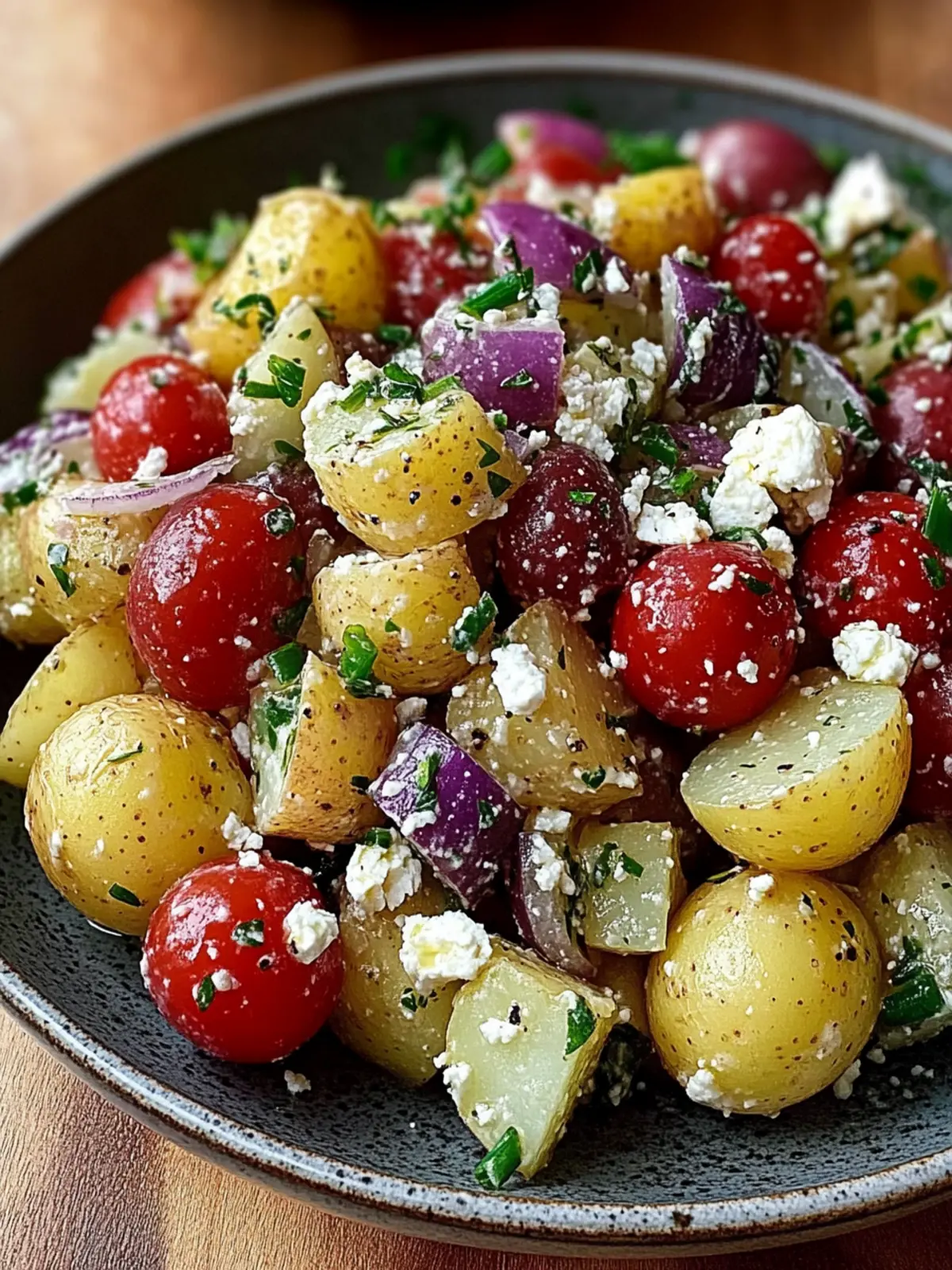
Why is Greek Potato Salad a must-try?
Vibrant flavors from the Mediterranean make this dish a delight for your taste buds. Quick and easy to prepare, it’s perfect for any occasion. Fresh ingredients like feta and olives add a deliciously salty kick, while colorful veggies boost its appeal. You can easily customize it with your favorite additions for a unique twist. Plus, it’s a fantastic make-ahead option; simply chill, serve, and enjoy compliments from your loved ones! Consider pairing it with grilled meats or a fresh loaf of bread for an even more delightful meal.
Greek Potato Salad Ingredients
• The key to creating this refreshing Greek Potato Salad lies in selecting top-quality ingredients.
For the Salad
- Baby Potatoes – Tender and creamy when cooked; substitute with larger potatoes if baby ones aren’t available.
- Kalamata Olives – Briny and savory; they add umami bursts that elevate the salad’s flavors.
- Feta Cheese – Creamy and salty; enriches the dish with its tangy goodness and can be swapped with goat cheese for a different flavor.
- Cherry Tomatoes – Offers sweet, juicy bursts; consider replacing them with diced bell peppers for added crunch.
- Cucumber – Provides refreshing crunch; substitute with celery if you prefer a different texture.
- Red Onion – Adds sharpness and crunch; for a milder taste, consider using green onions instead.
- Fresh Parsley and Dill – Brighten the dish with herbal notes; don’t hesitate to swap for basil or cilantro if you fancy a different flavor profile.
For the Dressing
- Extra Virgin Olive Oil – The base of the dressing, adding richness; choose a high-quality oil for optimal flavor.
- Red Wine Vinegar – Introduces tanginess that balances the richness; white wine vinegar is a suitable substitute.
- Dijon Mustard – Acts as an emulsifier with a slightly spicy flavor; yellow mustard can be used for a milder taste.
- Dried Oregano – A classic Greek herb that adds earthy notes; swap for fresh oregano for an even vibrant flavor.
- Garlic Powder – Adds a mild allium flavor; feel free to use fresh minced garlic for a stronger taste, adjusting to preference.
With these ingredients, your Greek Potato Salad will not only be delicious but also a hit at any gathering!
How to Make Greek Potato Salad
Boil Potatoes: Place baby potatoes in a pot, cover them with water, and add a generous pinch of salt. Bring to a boil over medium-high heat, allowing the potatoes to cook through.
Check Tenderness: Cook the potatoes for about 15-20 minutes until they are tender when pierced with a fork. Be careful not to overcook; they should hold their shape.
Cool and Cut: Drain the potatoes and let them cool slightly. Once cool enough to handle, cut them into bite-sized pieces for easy munching.
Whisk Dressing: In a mixing bowl, whisk together the extra virgin olive oil, red wine vinegar, Dijon mustard, dried oregano, garlic powder, salt, and pepper until well combined.
Toss Potatoes: Add the cooled potato pieces to the dressing and gently toss to coat each piece evenly. This is where the flavor magic starts!
Fold in Veggies: Carefully fold in the Kalamata olives, feta cheese, red onion, parsley, dill, cherry tomatoes, and cucumber until everything is combined.
Chill to Meld: Cover the salad and refrigerate for at least 1 hour. This resting time helps all those wonderful flavors meld together beautifully.
Serve and Garnish: Toss the salad again before serving, and consider garnishing with additional herbs if desired for an extra pop of color and flavor.
Optional: Add a squeeze of fresh lemon juice just before serving for a bright finish!
Exact quantities are listed in the recipe card below.
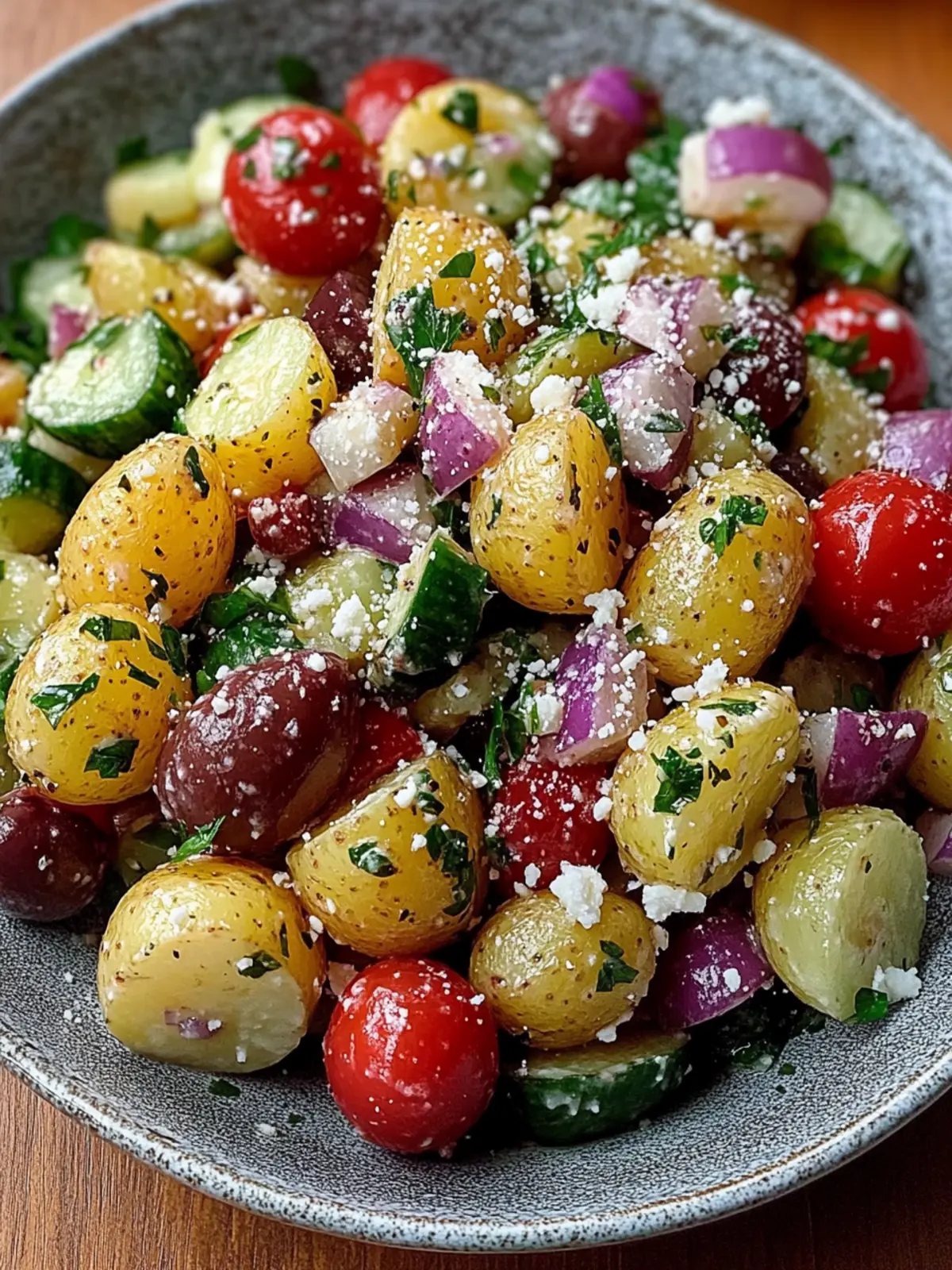
Expert Tips for Greek Potato Salad
Choose Quality Ingredients: Select fresh, high-quality baby potatoes and feta for the best flavors. Good ingredients are essential for an outstanding Greek Potato Salad.
Avoid Overcooking: Keep an eye on the potatoes while boiling. Overcooking can lead to mushy texture. Aim for tender yet firm pieces!
Chill for Flavor: Allow the salad to chill for at least an hour before serving. This resting time enhances the flavors, making each bite delightful.
Adjust to Taste: Don’t hesitate to tweak the acidity or salt levels in your dressing to suit your preference. A little taste-testing goes a long way!
Mix it Up: Experiment with additional ingredients like bell peppers or artichokes for a twist. Customizing your Greek Potato Salad can keep things exciting!
What to Serve with Greek Potato Salad?
Brighten your dining experience by exploring delightful pairings that enhance the refreshing flavors of this Mediterranean classic.
Grilled Chicken Skewers: Juicy, charred chicken pairs beautifully with the zesty salad, adding a savory contrast to the creaminess of feta.
Pita Bread: Soft and warm, pita is perfect for scooping up the salad, inviting everyone to dive into this delicious mix of flavors and textures.
Roasted Vegetables: Seasonal veggies roasted to caramelized perfection complement the salad’s freshness while adding a touch of earthy sweetness to the meal.
Lemon Herb Grilled Shrimp: The bright citrus notes from shrimp enhance the Mediterranean vibe, creating harmony with the salad’s flavors.
Hummus: This creamy dip adds another layer of taste and texture, making it perfect for spreading on pita or enjoying alongside the salad.
Watermelon Feta Salad: This sweet and savory dish echoes the flavors of the Greek Potato Salad while providing a refreshing burst of juiciness.
Red Wine Sangria: The fruity, refreshing notes of sangria are a delightful pairing, enhancing the enjoyment of your outdoor gatherings with the salad.
Baklava: End your meal on a sweet note with this rich pastry. The honeyed flavors contrast beautifully with the zesty salad, creating a delightful culinary journey.
How to Store and Freeze Greek Potato Salad
Fridge: Store leftovers in an airtight container for up to 3 days. The flavors continue to develop, making it even more delicious the next day!
Freezer: While it’s best enjoyed fresh, you can freeze the salad for up to 1 month. However, note that texture may change after thawing.
Reheating: If you decide to reheat, do so gently in the microwave or on the stove with a bit of olive oil, but keep it cold for optimal taste.
Dressing Refresh: When serving leftovers, consider adding a splash of olive oil or vinegar to refresh the salad’s flavor and maintain its vibrant taste.
Greek Potato Salad Variations & Substitutions
Feel free to get creative with this dish and cater it to your taste preferences—your culinary adventure awaits!
- Dairy-Free: Replace feta with a vegan cheese alternative or nutritional yeast for a cheesy flavor without the dairy.
- Herb Boost: Experiment with fresh herbs like basil, mint, or cilantro to add a unique twist and freshness to each bite.
- Added Heat: Incorporate diced jalapeños or a pinch of crushed red pepper flakes for a spicy kick that enlivens the flavors.
- Protein-Packed: Toss in some chickpeas or grilled chicken for added protein that transforms this salad into a satisfying main dish.
- Crunchy Twist: Top with toasted pine nuts or sunflower seeds before serving for added crunch and a nutty flavor contrast.
- Mediterranean Flair: Mix in roasted artichoke hearts or sun-dried tomatoes to infuse a rich Mediterranean essence.
- Olive Variety: Switch out Kalamata olives for green olives or capers to explore different flavor profiles in each serving.
- Veggie Fusions: Try adding roasted bell peppers, zucchini, or asparagus for a delightful blend of textures and seasonal flavors.
Make Ahead Options
Greek Potato Salad is a fantastic option for meal prep enthusiasts looking to save time during busy weeknights! You can make the salad up to 24 hours in advance for the best results—just prepare the vinaigrette and chop your vegetables ahead of time. Simply store the chopped ingredients separately in the refrigerator to maintain their texture and freshness. When you’re ready to serve, combine everything in a bowl, toss gently, and enjoy a deliciously vibrant salad. This make-ahead approach ensures that the flavors meld beautifully for a refreshing meal while allowing you to focus on other parts of your dinner, making mealtime a breeze!
Greek Potato Salad Recipe FAQs
What type of baby potatoes should I use?
For the best flavor and texture, opt for waxy baby potatoes like royal blue or fingerling potatoes. They hold their shape well after cooking. If baby potatoes aren’t available, larger Yukon gold or red potatoes can work just fine. Just remember to cut them into similar-sized pieces for even cooking!
How long can I store Greek Potato Salad in the refrigerator?
You can store leftovers in an airtight container in the refrigerator for up to 3 days. The flavors actually deepen over time, making your next serving just as enjoyable, if not better! Ensure you mix it well and consider adding a dash more olive oil or vinegar before serving for that fresh taste.
Can I freeze Greek Potato Salad?
While Greek Potato Salad is best served fresh, if you’d like to freeze it, do so for up to 1 month. To freeze, portion it into airtight bags or containers and remove as much air as possible. When ready to eat, thaw it in the fridge overnight, but be prepared for a change in texture, especially with the vegetables.
What should I do if my potatoes are mushy?
Oh no! If you’ve accidentally overcooked your potatoes, try using them as a base for a creamy potato salad instead. You can mash them slightly and enhance with extra feta, olives, or a dollop of Greek yogurt for creaminess. This way, you’ll still enjoy a delicious dish!
Are there any common allergies to consider with Greek Potato Salad?
Absolutely! This recipe includes dairy from feta cheese, which can be a concern for those with lactose intolerance. You might consider using a vegan feta or simply omitting it altogether for a lighter version. Additionally, check for olive allergies since Kalamata olives are a key ingredient. Always best to ask your guests if following a strict dietary requirement.
How do I choose the ripest vegetables for the salad?
When selecting vegetables, look for vibrant colors and firm textures—especially in tomatoes and cucumbers. Cherry tomatoes should be plump and slightly glossy, and cucumber should be crisp without any dark spots. This ensures a refreshing crunch throughout your salad.