
Butternut and Beetroot Salad with Maple Magic for Fall Feasts
Last Updated on March 13, 2026 by Miguel
There’s something about the crisp autumn air that stirs the desire for hearty, vibrant dishes, and this Creamy Butternut and Beetroot Salad is a perfect fit. I stumbled upon this delightful recipe while searching for a fresh twist on my usual salad rotation, and let me tell you, it was love at first bite! Roasting sweet butternut squash alongside earthy beetroot creates a caramelized depth of flavor that is nothing short of enchanting.
Topped with creamy mozzarella and drizzled with a sweet maple dressing, it’s the kind of dish that brings the warmth of the season right to your table. Whether you’re looking to impress guests at your next gathering or simply want a healthy spotlight for your lunch, this salad checks all the boxes—it’s vegetarian, gluten-free, and packed with nutrients. Plus, with its lovely pop of color, it feels like a celebration on your plate! So, let’s dive into the recipe and bring this gorgeous dish to life!
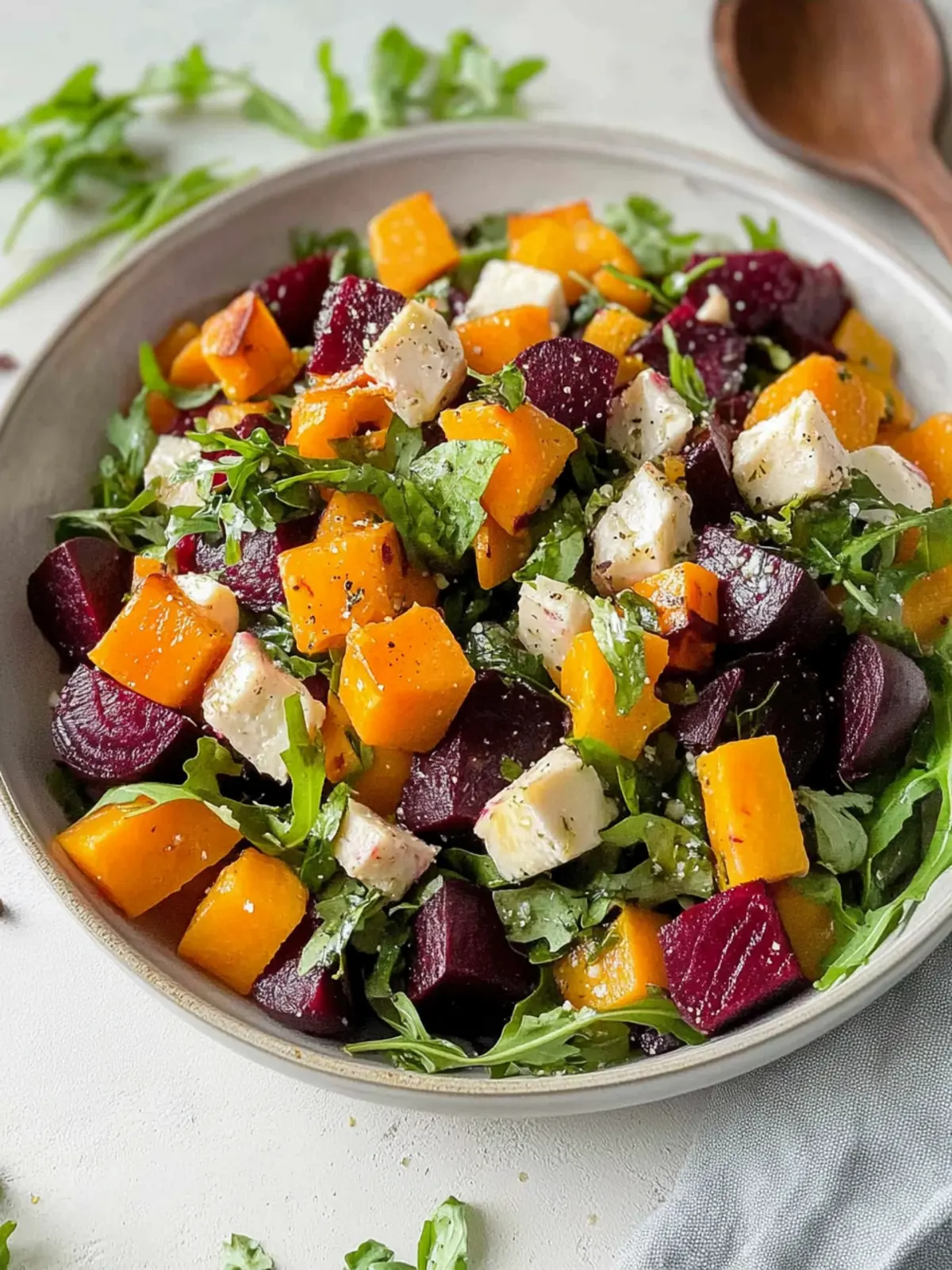
Why is Butternut and Beetroot Salad a must-try?
Colorful and nutritious, this salad brightens any table with its vibrant hues and robust flavors. Creamy mozzarella pairs beautifully with the roasted sweetness of the butternut squash and beetroot, delivering a satisfying bite. Versatile in nature, you can swap ingredients based on your pantry or dietary needs, ensuring that everyone enjoys it. Quick and easy to prepare, this dish saves you time while still impressing guests. Don’t miss out on making a salad that’s packed with health benefits and seasonal charm—explore more salad ideas for delightful variations!
Butternut and Beetroot Salad Ingredients
• Here’s what you need to create this delightful dish:
For the Salad
- Butternut Squash – Provides sweetness and a creamy texture when roasted; substitute with sweet potatoes for a different flavor profile.
- Beetroot – Adds earthy sweetness and vibrant color; if high in oxalates is a concern, substitute with broccoli or another vegetable.
- Mozzarella – Offers a creamy element to the salad; for a dairy-free option, use a vegan cheese alternative or omit if desired.
- Arugula/Rocket – Provides a peppery note and freshness; any green lettuce can be swapped in.
- Coriander/Parsley – Adds freshness and flavor; substitute with any preferred herb such as dill or basil.
- Pumpkin Seeds – Adds crunch and healthy fats; can replace with sunflower seeds or nuts for variation.
- Dried Thyme – Enhances the aromatic profile of the roasted vegetables; fresh thyme can be used for a more intense flavor.
For the Dressing
- Extra Virgin Olive Oil – Serves as the base for the dressing, contributing richness; can substitute with avocado oil if desired.
- Apple Cider Vinegar – Provides acidity and brightness; white distilled vinegar is an alternative for those sensitive to vinegar.
- Garlic – Contributes a savory depth to the dressing; omit for a milder flavor or replace with garlic powder.
- Maple Syrup – Adds sweetness to balance the dressing; adjust according to taste preference. Honey could be a substitute if not strictly vegan.
- Salt and Black Pepper – Season to taste; omit black pepper for a milder profile.
Bring together these ingredients to create a memorable Butternut and Beetroot Salad that dazzles both the eyes and the taste buds!
How to Make Butternut and Beetroot Salad
Preheat the oven to 180°C (350°F). Prepare a baking tray with parchment paper for easy cleanup. This initial step ensures your veggies roast perfectly without sticking!
Toss diced butternut squash and beetroot in extra virgin olive oil and dried thyme. Make sure each piece is well-coated for the best roasting results, bringing out their natural sweetness!
Roast in the oven for 30-40 minutes, checking for doneness when fork-tender. The vegetables should caramelize nicely, creating a lovely golden-brown hue. Allow them to cool slightly.
Whisk together the dressing ingredients (olive oil, apple cider vinegar, garlic, maple syrup, salt, and pepper) in a separate bowl. Taste and adjust the sweetness with more maple syrup if desired—this dressing should balance nicely with the veggies!
Combine the roasted vegetables, arugula, coriander, and mozzarella in a serving bowl. Drizzle with the maple dressing and toss gently to combine, ensuring every bit is dressed beautifully.
Optional: Garnish with extra pumpkin seeds for a delightful crunch!
Exact quantities are listed in the recipe card below.
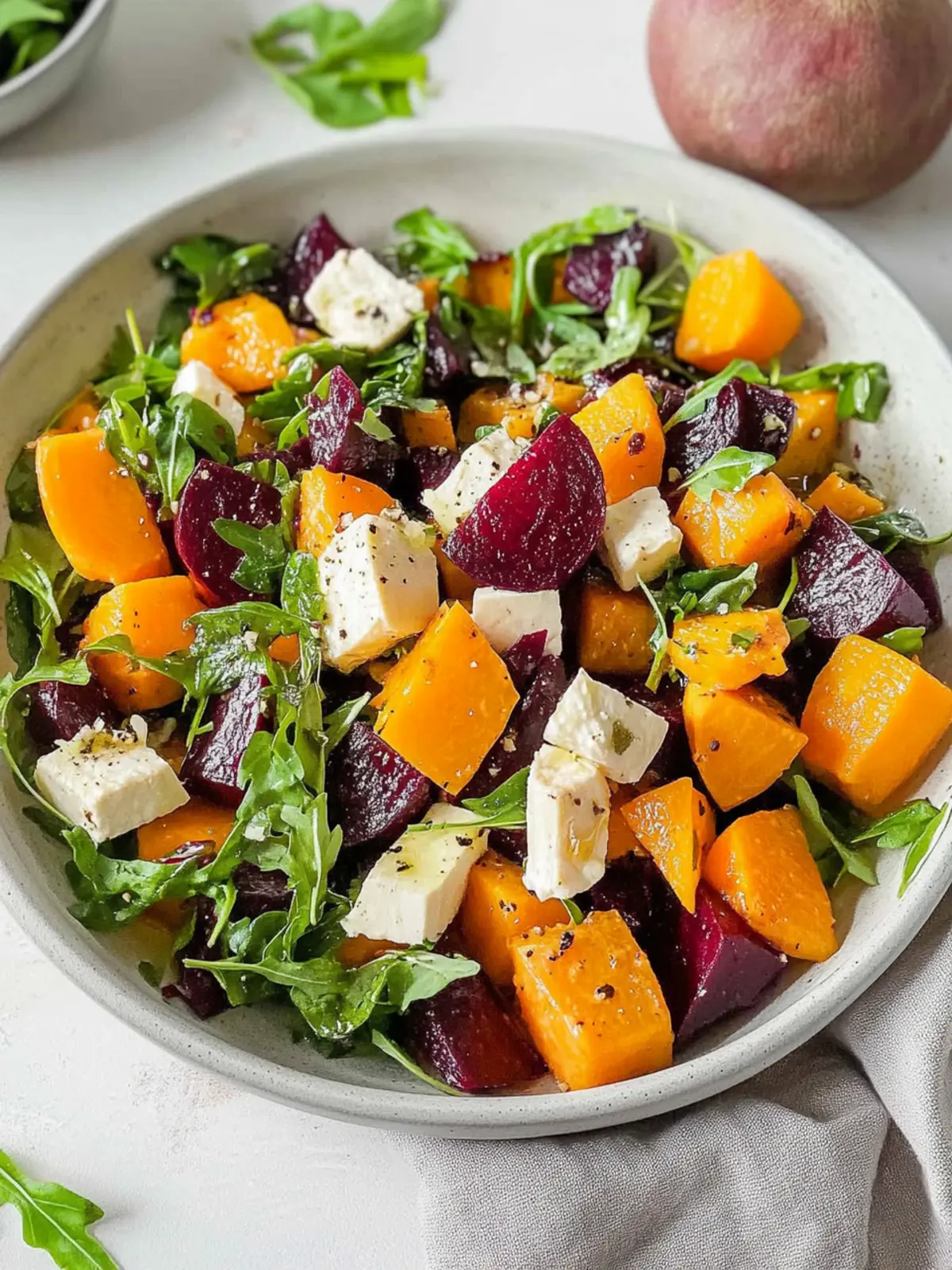
Expert Tips for Butternut and Beetroot Salad
Cut Evenly: Ensure vegetable pieces are uniform in size to promote even roasting; irregular sizes can lead to undercooked or burnt pieces.
Watch the Clock: Don’t forget to monitor the roasting closely! Beetroot can take longer to cook than butternut squash, so check for tenderness regularly.
Dressing Balance: Adjust the garlic and maple syrup in the dressing to match your taste preferences; a quick taste test can make all the difference.
Check for Histamine: If you’re concerned about low histamine diets, consider omitting ingredients like vinegar or garlic to ensure it’s suitable for your needs.
Add Crunch: For some extra texture, consider toasting your pumpkin seeds or substituting with different nuts or seeds to elevate your Butternut and Beetroot Salad.
How to Store and Freeze Butternut and Beetroot Salad
Fridge: Store any leftovers in an airtight container for up to 3 days to keep the flavors fresh. The tastes will meld beautifully overnight!
Freezer: If you want to make this salad ahead of time, freeze the roasted butternut squash and beetroot separately for up to 3 months.
Reheating: When ready to use, thaw the vegetables in the fridge overnight and reheat in the oven or microwave, then toss with fresh greens and dressing.
Serving: For the best texture, serve the salad chilled or at room temperature after combining the fresh ingredients to maintain the integrity of the salad!
Butternut and Beetroot Salad Variations
Feel free to explore these delightful twists to make your salad even more unique and satisfying!
- Dairy-Free: Substitute the mozzarella with a vegan cheese alternative or omit it completely for a lighter salad.
- Nutty Crunch: Swap pumpkin seeds for toasted almonds or walnuts for a richer, heartier texture that adds an unexpected crunch.
- Spicy Kick: Add a sprinkle of chili flakes or some diced jalapeños to the salad for a warm heat that beautifully contrasts the sweetness.
- Herb Twist: Experiment with fresh basil or mint instead of coriander for a refreshing twist that brightens the entire dish.
- Roasted Garlic: Instead of raw, add roasted garlic to your dressing for a sweeter, more mellow flavor profile.
- Grains Addition: Mix in quinoa or farro for added protein and an interesting chew; it’s a wonderful way to make the salad more filling!
- Citrusy Zing: Squeeze fresh lemon juice over the salad just before serving to enhance the flavors and add a zesty brightness.
- Crunchy Veggies: Toss in some finely chopped celery or bell peppers for extra crunch and a pop of color that complements your beets and squash.
The beauty of cooking lies in your ability to adapt and create! Enjoy playing around with these variations to find your perfect combination.
What to Serve with Butternut and Beetroot Salad?
Crafting a complete meal around this vibrant salad can elevate any dining experience. Here are some delightful pairings to complement its sweet and earthy flavors.
Grilled Chicken: Juicy, herb-marinated chicken adds a savory richness that nicely contrasts the salad’s sweetness, making it a satisfying main.
Roasted Salmon: The rich, flaky salmon pairs beautifully with the earthiness of beets, enhancing the dish’s healthy profile while introducing delectable flavors.
Quinoa Pilaf: Light, fluffy quinoa brings a nutty flavor and provides an extra protein boost, ensuring a nutrient-dense meal that feels hearty yet wholesome.
Garlic Bread: Crunchy, buttery garlic bread acts as a wonderful vessel for scooping up the salad, while the flavors harmonize beautifully with the roasted veggies.
Hummus Platter: A colorful assortment of vegetables with homemade hummus adds fresh, creamy elements, creating a lovely contrast to the salad’s textures and flavors.
Herbal Iced Tea: Refreshing herbal iced tea offers a cooling, lightly sweetened sip that complements the salad while providing a touch of seasonal delight.
Chocolate Mousse: End your meal on a sweet note with a light chocolate mousse; its rich, creamy texture is an indulgent contrast to the salad’s freshness.
Baked Sweet Potatoes: These naturally sweet and comforting potatoes bring out the sweet notes in the salad while adding a hearty, wholesome element to your meal.
Apple Crisp: A warm apple crisp brings a cozy finish, combining crispness and sweetness that elegantly mirrors the autumnal flavors found in the salad.
Make Ahead Options
These Butternut and Beetroot Salad ingredients are perfect for meal prep enthusiasts! You can roast the butternut squash and beetroot up to 24 hours in advance, allowing their flavors to deepen while saving cooking time. Simply refrigerate them in an airtight container once cooled. Additionally, the dressing can be whisked together a few days ahead and stored in the fridge; just give it a little shake before using to blend any settled ingredients. When you’re ready to serve, combine the roasted vegetables, arugula, coriander, and mozzarella, drizzle with the dressing, and toss gently. This way, you’ll enjoy a fresh, delicious salad with minimal effort—perfect for busy weeknights!
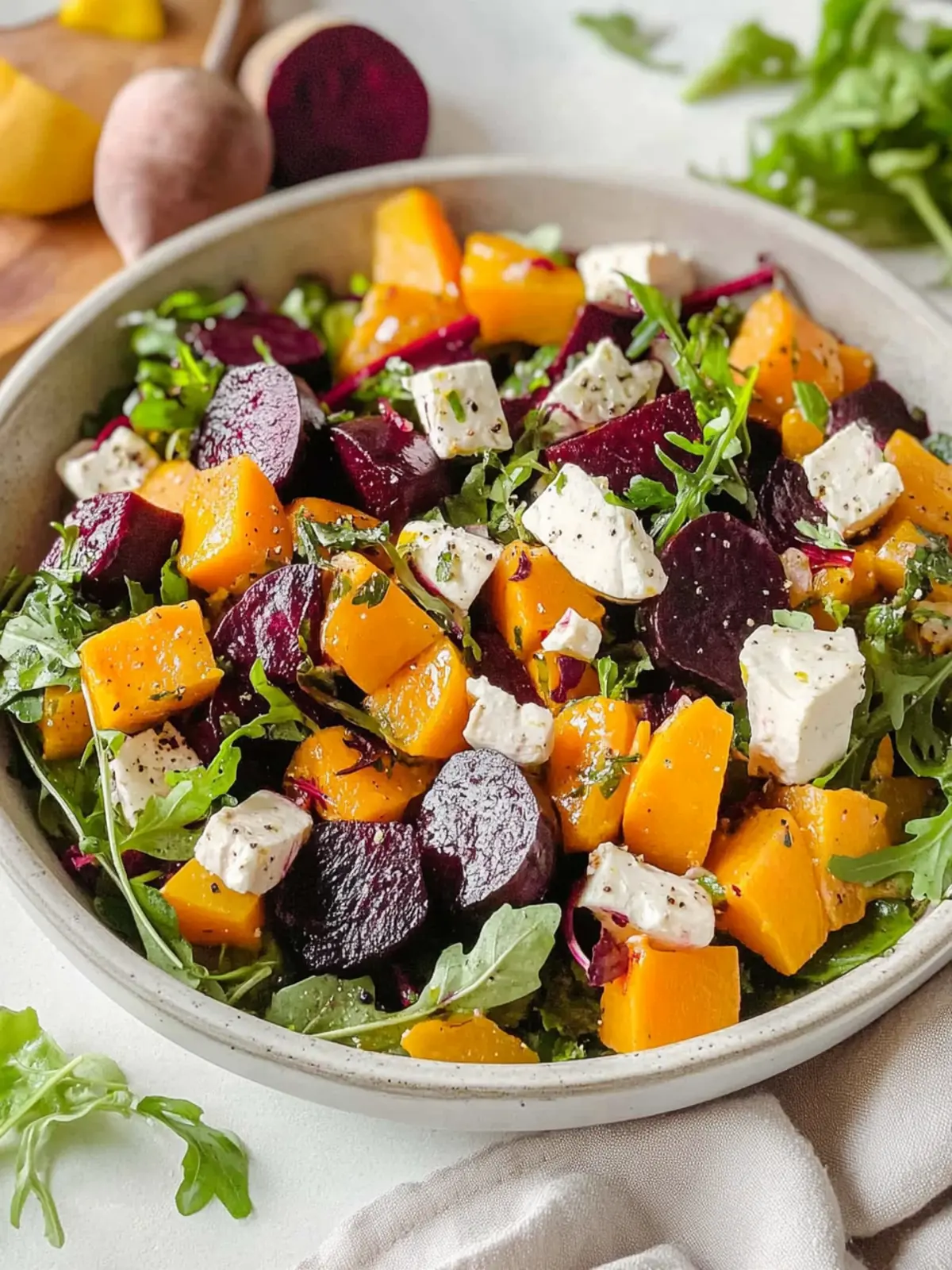
Butternut and Beetroot Salad Recipe FAQs
How do I select ripe butternut squash?
Absolutely! Look for butternut squash that feels heavy for its size and has a tan, matte skin—glossy skin could indicate it’s under-ripe. Avoid any with dark spots or soft spots, as these can signal overripeness.
How should I store leftovers of the salad?
You can safely store leftover Butternut and Beetroot Salad in an airtight container in the refrigerator for up to 3 days. I recommend keeping the dressing separate until you’re ready to enjoy it again to prevent the greens from wilting.
Can I freeze the roasted vegetables?
Definitely! To freeze your roasted butternut squash and beetroot, allow them to cool completely, then spread them out on a baking tray to freeze individually for 1 to 2 hours. Once frozen, transfer them to a freezer bag, squeezing out any air, and store for up to 3 months. When you’re ready to use them, thaw them overnight in the refrigerator before adding fresh ingredients.
What should I do if my beetroot is overcooked?
If your beetroot ends up overcooked and mushy, don’t worry! While it might lose some of its texture, you can still salvage it by combining it with more roasted vegetables or using it in a smoothie for added color and nutrients. Just blend well with your favorite fruits and greens.
Are there any dietary considerations for pets regarding the ingredients?
It’s wise to avoid sharing your Butternut and Beetroot Salad with pets. Ingredients like garlic can be harmful to dogs and cats. Always check with your veterinarian if you’re unsure about the safety of specific foods for your furry friends.
Can I adjust the dressing for a low histamine diet?
Absolutely! For a low histamine-friendly dressing, you can omit the garlic and apple cider vinegar. Instead, a touch of fresh lemon juice and maple syrup blended with olive oil will create a delightful dressing that keeps your salad flavorful and compliant! Adjust the sweetness according to your taste, and enjoy!