
Tender Traditional Sauerbraten: A Comforting German Classic
Last Updated on March 13, 2026 by Miguel
As the chilly air settles in, I find myself yearning for heartwarming meals that carry the essence of home. One such dish that never fails to transport me to a cozy kitchen laden with comforting aromas is Traditional Sauerbraten. This classic German recipe involves marinating tender beef in a harmonious blend of spices, vinegar, and onions, transforming an ordinary cut of meat into a masterpiece of flavor over several days.
There’s a certain joy in watching something so simple evolve into a dish that’s rich and sumptuous, with gravy that beckons for a scoop of creamy mashed potatoes or spaetzle. Whether you’re planning a festive gathering or simply looking to impress your family with a delicious home-cooked dinner, Sauerbraten delivers both comfort and sophistication. Let’s embark on this culinary journey together; with a little patience and care, you will create a dish that not only tantalizes the taste buds but also warms the heart.
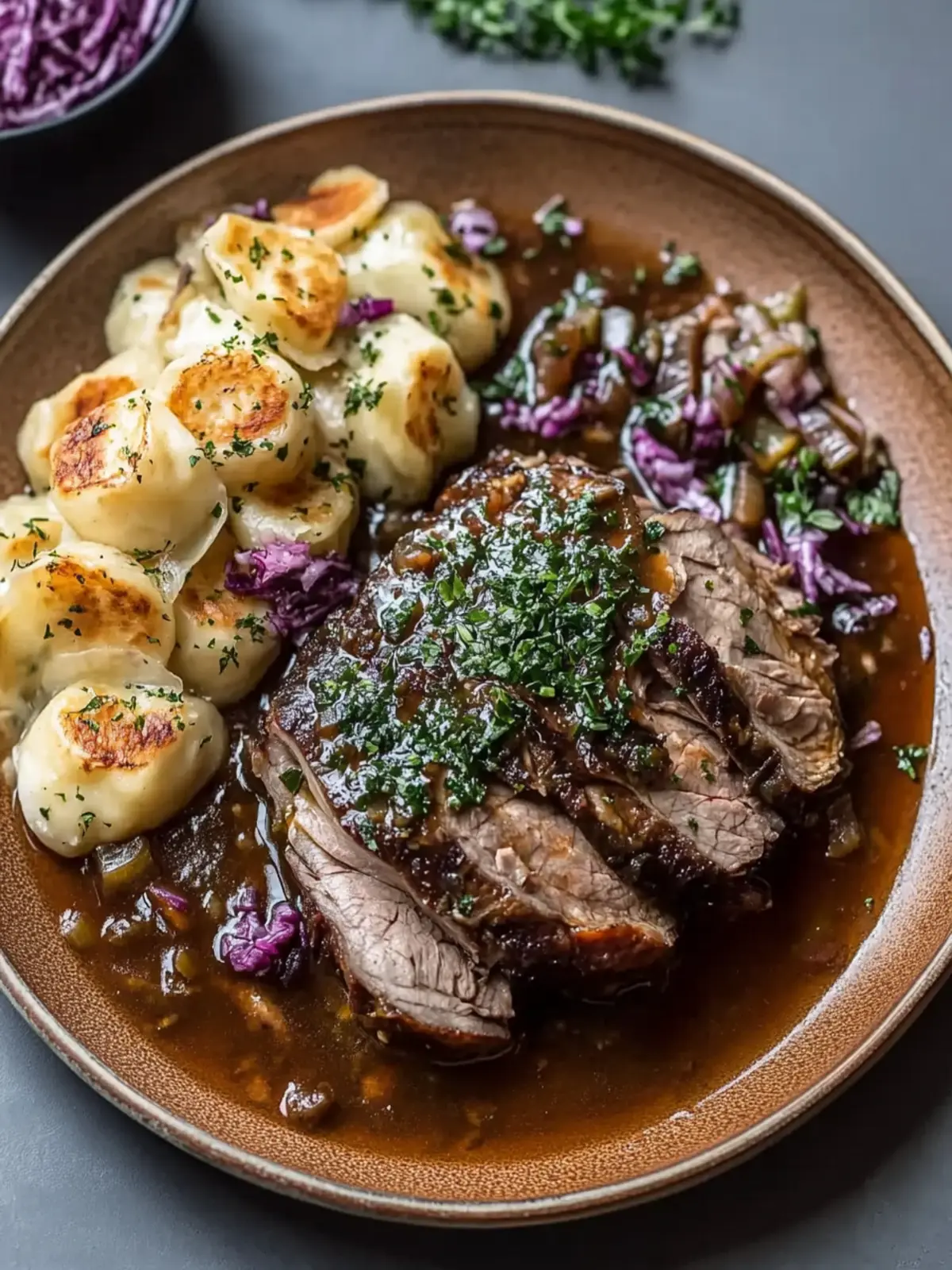
Why is Traditional Sauerbraten a must-try?
Comforting Aroma: As it marinates, the blend of spices, vinegar, and onions creates an irresistible scent that fills your kitchen, enticing family and friends alike.
Rich Flavor: The unique combination of tender, melt-in-your-mouth beef and a thick, sweet-savory gravy offers layers of flavor that linger long after the meal is over.
Perfect for Gatherings: This dish turns any occasion into a celebration, bringing warmth and joy to festive tables or cozy family dinners.
Versatile Options: With gluten-free alternatives available for gingersnaps, everyone can enjoy this classic delight.
Slow-Cooked Love: While it requires patience, the process is straightforward and rewarding, ensuring you have a comforting meal without much active cooking time.
Explore more ways to enjoy your cooking journey by checking out other delicious recipes!
Traditional Sauerbraten Ingredients
For the Marinade
- Beef (Rump roast or chuck roast) – This cut creates deliciously tender meat after slow cooking.
- Red wine vinegar – Adds a tangy kick that’s essential for tenderizing the beef; apple cider vinegar is a great, milder substitute.
- Water – Necessary for the marinade and for braising the beef to keep it moist.
- Onions (sliced) – Sweetens the marinade and enhances the depth of flavor in the gravy.
- Garlic (minced) – Fresh garlic enriches the dish with its aromatic complexity.
- Sugar – Balances the acidity in the marinade; brown sugar gives a deeper sweetness.
- Bay leaves – These contribute subtle, earthy notes to the marinade.
- Cloves, allspice, peppercorns – Important spices that are signature to German cuisine, infusing warmth into the dish.
For Cooking the Beef
- Vegetable oil – Vital for searing the beef, forming a flavorful crust.
- Beef broth – Enriches the braising liquid and forms the base for the gravy.
For the Gravy
- Gingersnap cookies (crushed) – Thickens the gravy while providing a hint of sweetness; gluten-free options can also be used.
- Butter and flour – Combined to create a roux that adds a silky texture to your gravy.
For Garnishing
- Fresh parsley (optional) – Brightens the dish with a pop of color and a fresh touch.
These essential ingredients for your Traditional Sauerbraten will transform your kitchen into a warm haven, resonating with delightful aromas that promise a heartwarming meal ahead!
How to Make Traditional Sauerbraten
Marinate the Beef (3-5 days): In a large bowl, mix the red wine vinegar, water, sliced onions, minced garlic, sugar, and spices. Pour this fragrant mixture over the beef in a non-reactive container, ensuring it’s fully submerged. Refrigerate, turning daily for even marination.
Prepare for Cooking: After marinating, take the beef out and pat it dry with paper towels. In a hot skillet, sear the beef in vegetable oil until it’s beautifully browned on all sides, about 4-5 minutes each. This step adds flavor and texture!
Braise the Beef: Transfer the beef to a heavy pot, and add the reserved marinade and beef broth. Bring it to a gentle simmer, cover, and let it cook on low heat for approximately 3 hours, or until the beef is fork-tender and bursting with flavor.
Make the Gravy: Once the beef is tender, carefully remove it from the pot. Strain the cooking liquid to leave behind any solids and return it to the pot. Stir in the crushed gingersnaps followed by a roux made from butter and flour, cooking until the gravy thickens to a velvety consistency.
Serve: Slice the beef against the grain and generously drizzle it with the rich gravy. Feel free to garnish with fresh parsley for a pop of color. Pair this dish with classic sides like mashed potatoes or braised red cabbage.
Optional: Serve with a sprinkle of fresh parsley for an added burst of freshness.
Exact quantities are listed in the recipe card below.
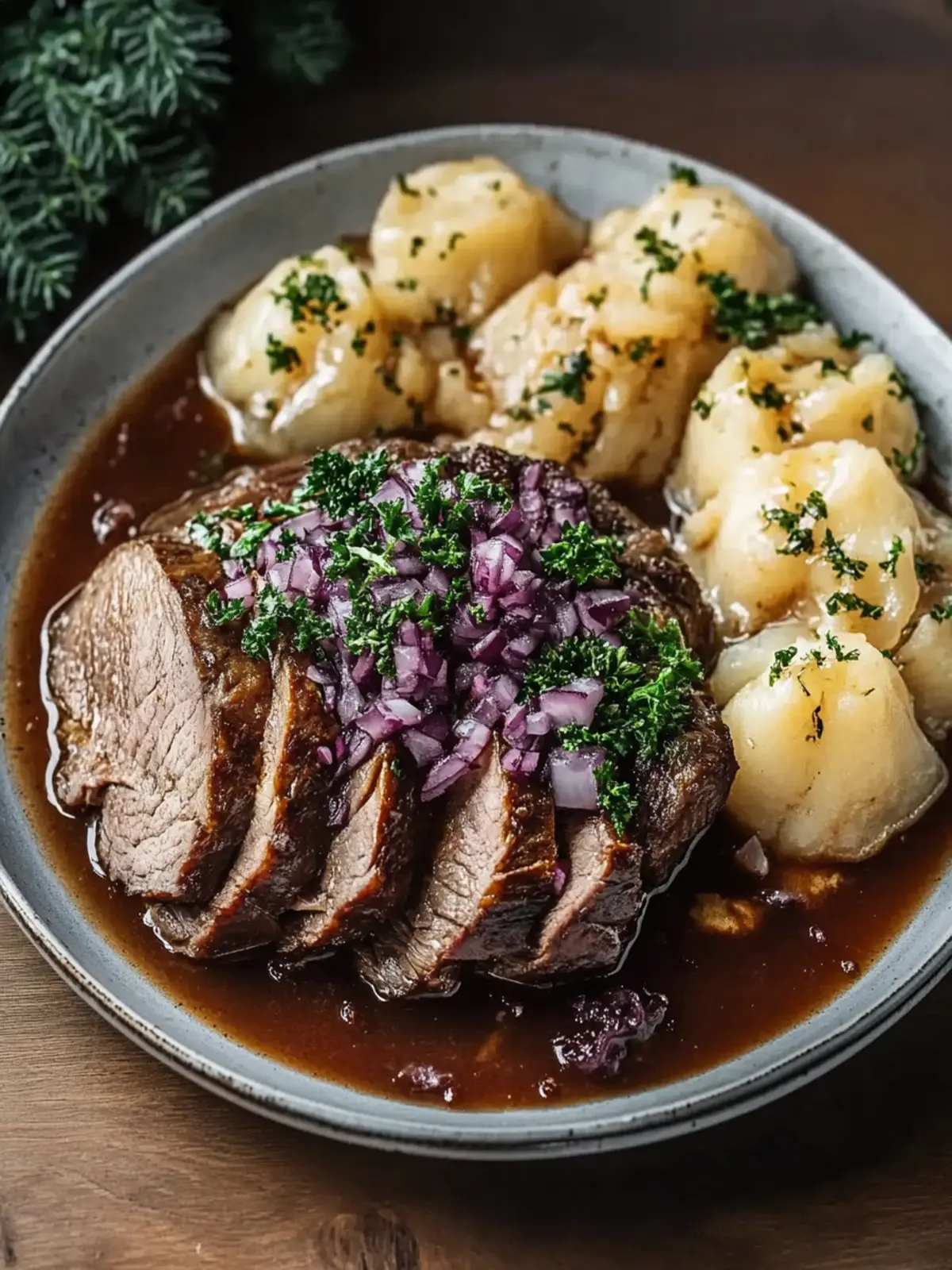
Traditional Sauerbraten Variations & Substitutions
Feel free to personalize this recipe and make it your own with these exciting variations! Each twist is an invitation to explore new flavors and enjoy this timeless dish in delightful ways.
Cut of Beef: Use brisket or even flank steak for a different texture and flavor profile. Each cut offers its own unique tenderness, so let your preferences guide you!
Vinegar Swap: Balsamic or apple cider vinegar can replace red wine vinegar for a sweeter taste. The beauty of Sauerbraten lies in its adaptability; adjust the tanginess to suit your palate.
Sweetening Options: Try honey or maple syrup instead of sugar for a natural sweetness. These alternatives create a beautifully rich, caramelized flavor that enhances the gravy.
Herb Infusion: Add fresh herbs like thyme or rosemary to the marinade for an aromatic twist. The fragrant addition will elevate the dish, making it a delicious centerpiece for your table.
Spice It Up: Incorporate a pinch of red pepper flakes or cayenne for a mild kick. This adds warmth without overpowering the classic flavors, inviting a delightful surprise with each bite.
Gluten-Free Gingersnaps: Use gluten-free gingersnap cookies to thicken your gravy while staying true to dietary needs. It’s a simple tweak that ensures everyone at the table can indulge.
Vegetarian Version: For a plant-based twist, substitute beef with hearty mushrooms or jackfruit. Marinate them just like you would the meat to capture those deep, savory flavors.
By experimenting with these variations, you can create a version of Traditional Sauerbraten that speaks to your taste and dietary needs, making every meal not only a feast for the eyes but also for the heart!
What to Serve with Traditional Sauerbraten?
As you prepare to savor the stunning flavors of this classic German dish, it’s essential to consider what sides will complement its rich, savory profile.
Creamy Mashed Potatoes: The buttery, smooth texture of mashed potatoes perfectly soaks up the luscious gravy, making each bite irresistible.
Braised Red Cabbage: Offering a sweet and tangy contrast, this vibrant side enhances the overall meal with its crunch and brightness.
Spaetzle: These soft German noodles are not only traditional but also ideal for capturing the saucy goodness of Sauerbraten.
Roasted Root Vegetables: Carrots, parsnips, and potatoes roasted to caramelized perfection add earthy sweetness, balancing the savory flavors of the beef.
German Potato Salad: Tossed in a tangy dressing, its warmth embraces the comfort of Sauerbraten while providing a refreshing lift to your plate.
Pickled Cucumbers: Adding a zingy crunch, pickles cut through the richness, brightening your meal and providing delightful texture.
Dark Beer: A rich, malty stout pairs wonderfully, enhancing the hearty flavors and providing a festive touch to your dining experience.
Each of these options beautifully complements the tender, flavorful essence of your Traditional Sauerbraten, creating a feast that warms the heart and satisfies the soul.
Expert Tips for Traditional Sauerbraten
Marination Matters: Ensure to marinate for at least three days to infuse the beef with robust flavors and achieve optimum tenderness.
Choose the Right Cut: Opt for rump roast or chuck roast, as these cuts are ideal for slow cooking, yielding exceptionally tender meat.
Watch Your Gravy: If the gravy becomes too thick during cooking, simply adjust the consistency using additional beef broth to keep it silky.
Keep an Eye on Heat: Utilize a heavy pot or Dutch oven for even heat distribution while braising your Traditional Sauerbraten, preventing any hot spots.
Gingersnap Tips: Traditional gingersnaps give the gravy its characteristic sweetness; don’t hesitate to use gluten-free alternatives if needed.
Slicing Technique: Always slice the beef against the grain for optimal tenderness, ensuring each bite is melt-in-your-mouth delicious.
How to Store and Freeze Traditional Sauerbraten
Refrigerator: Store leftover Sauerbraten in an airtight container for up to 4 days. The flavors actually deepen and become more delightful the longer it sits.
Freezer: For longer storage, freeze the Sauerbraten in a well-sealed container or heavy-duty freezer bag for up to 3 months. Make sure to label it with the date!
Thawing: To enjoy frozen Sauerbraten, thaw it overnight in the refrigerator. This ensures it retains the juicy tenderness you’re looking for.
Reheating: Reheat gently on the stovetop over low heat or in the oven covered with foil, adding a splash of beef broth if necessary to keep it moist and delicious.
Make Ahead Options
Planning ahead makes preparing Traditional Sauerbraten a breeze! You can marinate the beef up to 5 days in advance to ensure it’s infused with those rich flavors. Simply combine the marinade ingredients and store them in a non-reactive container with the beef, turning daily. For the actual cooking, sear the beef and then braise it up to 24 hours before serving; just reheat gently to maintain tenderness. To save even more time, you can make the gravy in advance, refrigerate it, and reheat just before serving. This will allow the flavors to meld beautifully, ensuring your Traditional Sauerbraten is just as delicious and satisfying as if made fresh. Enjoy more time with your loved ones while serving a comforting meal!
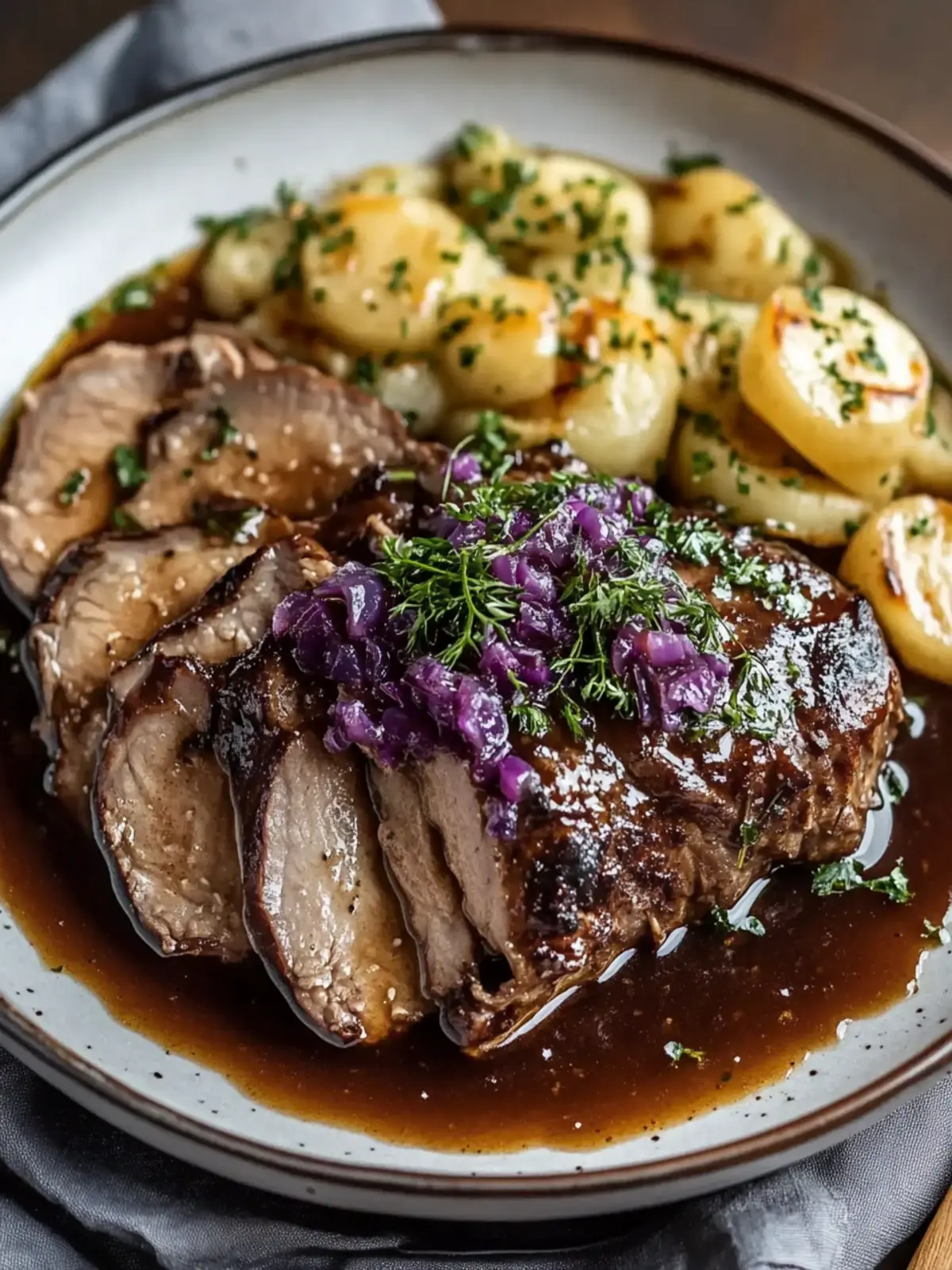
Traditional Sauerbraten Recipe FAQs
What type of beef is best for Sauerbraten?
Absolutely! The best cuts for Sauerbraten are rump roast or chuck roast. These selections provide the ideal balance of flavor and tenderness, especially after the slow cooking and marination process, transforming a simple cut into something truly delightful.
How should I store leftover Sauerbraten?
Leftover Sauerbraten is a treasure! Store it in an airtight container for up to 4 days in the refrigerator. As it sits, the flavors will actually deepen, making those leftovers almost a meal of their own!
Can I freeze Sauerbraten?
Certainly! To freeze Sauerbraten, portion it into a well-sealed container or a heavy-duty freezer bag for up to 3 months. Don’t forget to label it with the date! When you’re ready to enjoy it, thaw it overnight in the refrigerator to ensure it retains its juicy tenderness.
How do I reheat Sauerbraten without losing tenderness?
To retain the delightful tenderness of your Sauerbraten when reheating, do so gently. Place it on the stovetop over low heat or in the oven covered with foil. Adding a splash of beef broth can help keep it moist and flavorful. Remember to check the temperature periodically to avoid overcooking!
Can I use gluten-free ingredients for this recipe?
Very much so! You can substitute traditional gingersnaps with gluten-free alternatives, ensuring that those with gluten sensitivities can still enjoy this comforting dish. Just make sure to check the labels for any hidden gluten ingredients!
What if my gravy turns out too thick?
If you find your gravy has thickened too much, don’t fret! Simply add a bit of additional beef broth to your pot, stirring until you reach your desired consistency. It’s always easier to adjust to a thinner gravy than to try and fix it once it’s overly thick. I often add broth in small increments to control the texture!