
Korean Style Pot Roast: A Comforting One-Pot Wonder
Last Updated on March 13, 2026 by Miguel
There’s nothing quite like the intoxicating aroma of a pot roast slowly cooking in the oven, and today I’m excited to elevate that classic dish with a vibrant twist. My Korean Style Pot Roast infuses the traditional flavors of tender beef and hearty vegetables with the bold, spicy-sweet notes of gochujang and soy sauce. It all started when I was experimenting with pantry staples, craving something comforting yet different.
This one-pot meal is perfect for those cold evenings when you want to wrap yourself in warmth and flavor, making it the ideal dish for cozy gatherings, meal prep, or surprise guests. Just imagine the savory, melt-in-your-mouth beef served alongside fluffy white rice or creamy mashed potatoes—each bite a delightful surprise that blends the flavors of Korean fusion with the heartiness of home-cooked comfort food. If you’re looking for a dish that’s easy to prepare yet impressively flavorful, you’re in for a treat!
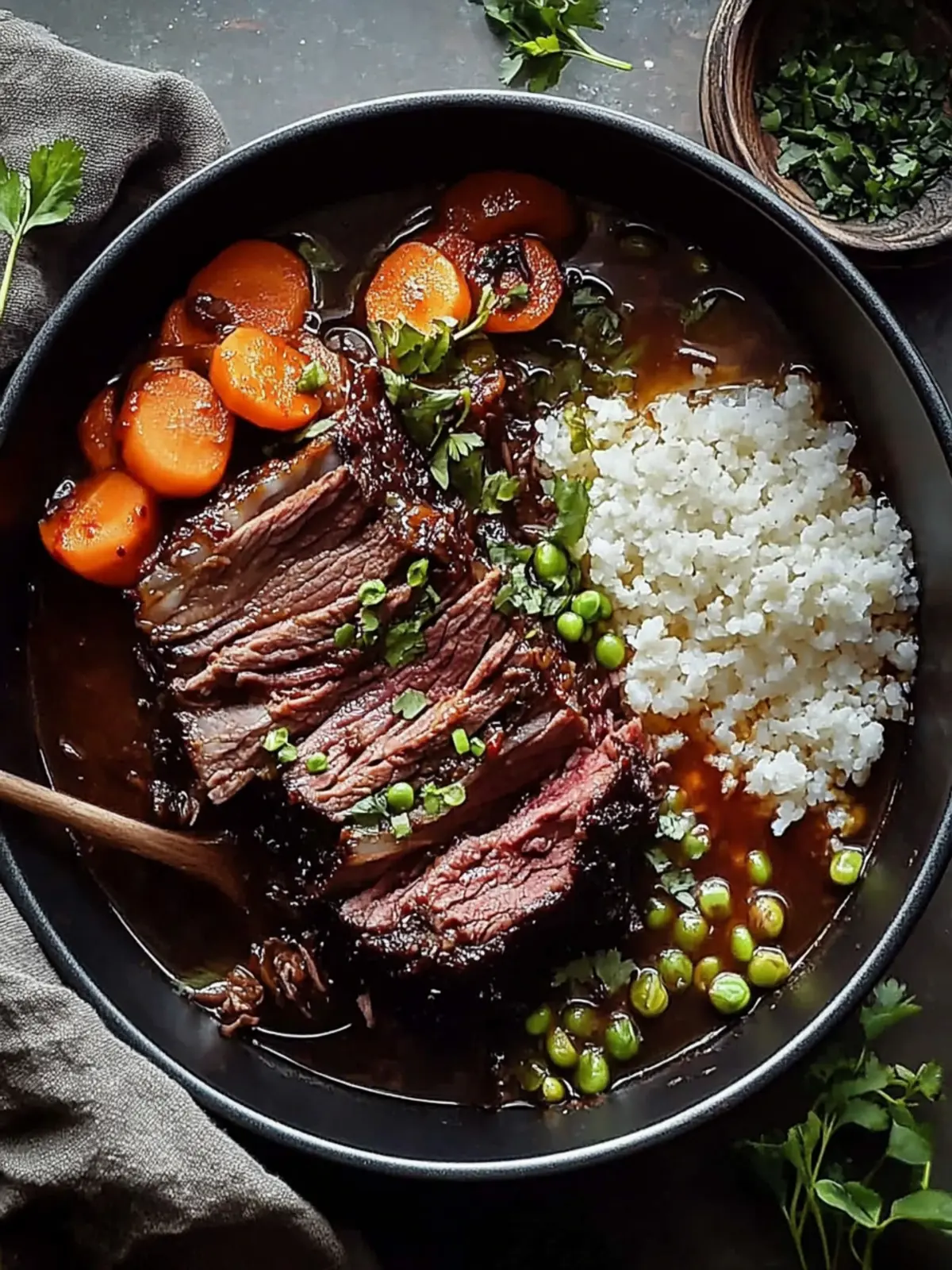
Why is Korean Style Pot Roast a Must-Try?
Simplicity: This recipe embraces an effortless one-pot method, making it accessible for cooks of all skill levels.
Bold Flavor: The incorporation of gochujang, soy sauce, and ginger creates a unique taste that will excite your palate.
Hearty Comfort: A warm, filling meal perfect for chilly nights or gatherings, ensuring everyone leaves satisfied.
Versatile Serving Options: Enjoy with rice, mashed potatoes, or caught in lettuce wraps for a fun twist.
Make-Ahead Friendly: This pot roast develops its flavors beautifully over time, making leftovers even more delicious—perfect for busy weeknights!
Get ready to impress with this deliciously tender pot roast that transforms a classic dish into a flavorful culinary adventure.
Korean Style Pot Roast Ingredients
For the Pot Roast
- Chuck Roast – Rich and tender, this cut is ideal for slow cooking; substitutes like brisket or beef shoulder work well too.
- Carrots – Adding sweetness and texture, you can swap in parsnips or other root vegetables for variety.
- Onion – This aromatic foundation adds depth and sweetness; yellow or white onions are perfect options.
- Garlic – Fresh garlic enhances flavor complexity; dried can work in a pinch but fresh is best!
- Fresh Ginger – Adds warmth and a slight spiciness, though ground ginger can be used if fresh isn’t available.
- Soy Sauce – Provides umami depth; opt for low-sodium soy sauce for better salt control.
- Gochujang (Korean chili paste) – This key ingredient brings a spicy-sweet flavor to the pot roast; you can substitute with a mix of red chili paste, miso, and sugar if needed.
- Brown Sugar – Balances the heat with sweetness; honey or maple syrup can work in moderation as alternatives.
- Rice Vinegar – Adds a touch of acidity; apple cider vinegar can replace it if necessary.
- Sesame Oil – A drizzle of this nutty oil enhances the flavor and aroma just before serving.
- Beef Broth – Rich liquid essential for sauce depth, both homemade and store-bought options are great.
For Garnishing
- Green Onions – They add freshness and color; finely chop for a beautiful topping.
- Cilantro – Optional, but recommended for an added burst of flavor and visual appeal.
Now that you have all the ingredients ready, you’re just one step away from creating a wonderful dish that is the epitome of Korean fusion comfort food!
How to Make Korean Style Pot Roast
Prepare the Meat: Pat the chuck roast dry with paper towels and season generously with salt and pepper. This step is crucial for enhancing the meat’s flavor as it cooks.
Sear the Roast: In a Dutch oven, heat oil over medium-high heat. Sear the roast until it’s deeply browned on each side, about 3-4 minutes per side. This creates delicious flavor and crust.
Sauté Aromatics: Remove the roast and, in the same pot, add sliced onion, minced garlic, and fresh ginger. Sauté for 3-4 minutes until fragrant and softened, stirring occasionally.
Mix Sauce Ingredients: Stir in gochujang, soy sauce, brown sugar, and rice vinegar until well combined. The mixture will be vibrant and slightly thick.
Deglaze the Pot: Pour in the beef broth to the pot and deglaze, scraping up any browned bits from the bottom. These bits add a depth of flavor to your sauce.
Combine & Cook: Return the seared roast to the pot, placing it in the center. Surround it with chopped carrots to ensure even cooking.
Braise in Oven: Cover and braise in the oven at 325°F (163°C) for 3 to 3.5 hours, or until the meat is fork-tender. The house will smell incredible!
Finish & Serve: Skim off any excess fat, drizzle with sesame oil, and garnish with chopped green onions and cilantro before serving for an added pop of flavor.
Enjoy with Sides: Serve hot over fluffy rice, creamy mashed potatoes, or even in lettuce wraps for a unique and delish experience.
Optional: Garnish with sesame seeds for an extra touch of flavor and crunch.
Exact quantities are listed in the recipe card below.
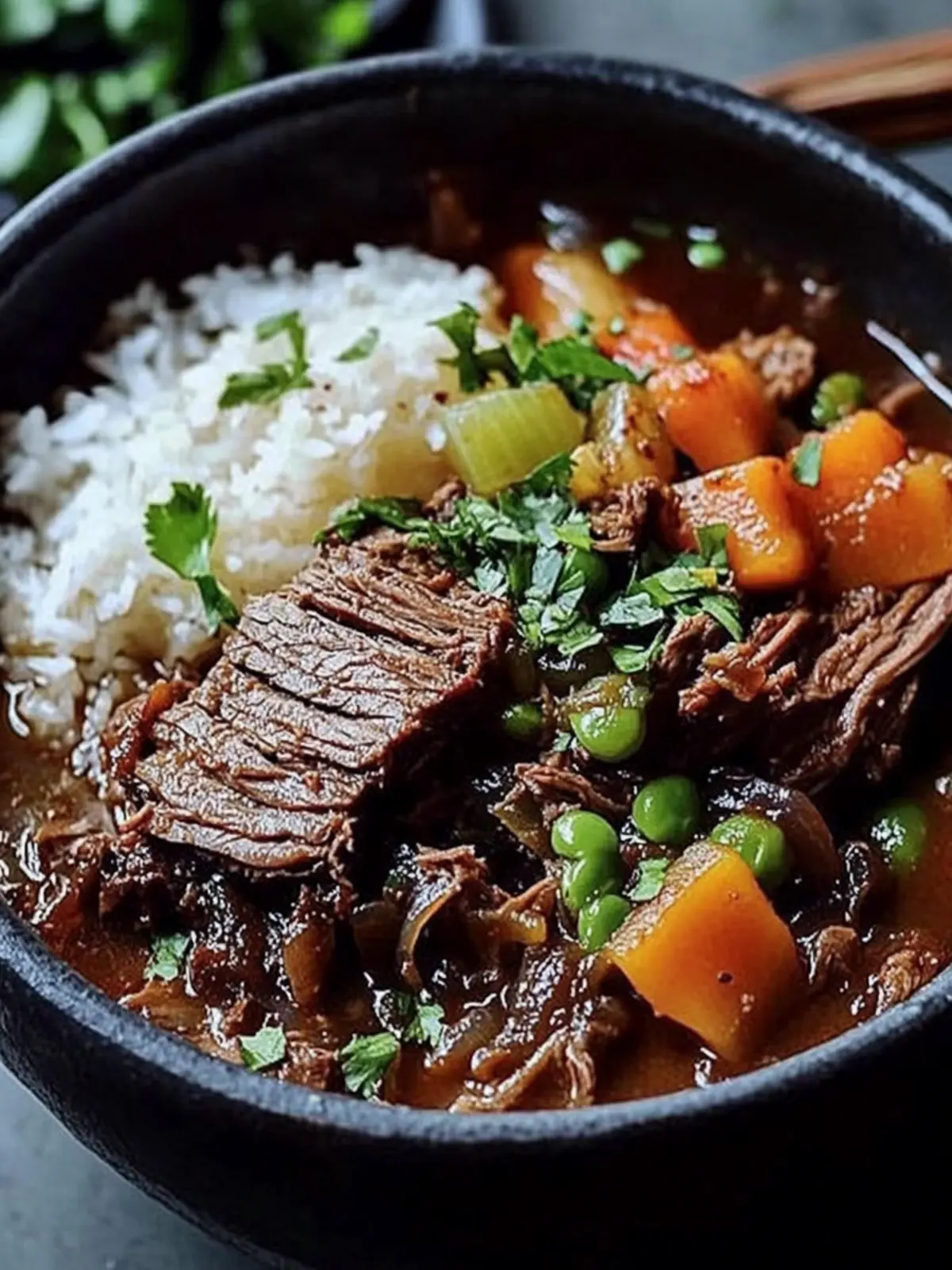
What to Serve with Korean Style Pot Roast?
This dish is a celebration of comforting flavors, making it essential to choose the right accompaniments that enhance its rich, savory profile.
Fluffy White Rice: Perfect for soaking up the delicious sauce, bringing a satisfying base to each flavorful bite of pot roast.
Creamy Mashed Potatoes: Their buttery texture contrasts beautifully with the tender beef and provides a soothing balance in every mouthful.
Steamed Vegetables: Bright, crisp vegetables like broccoli or green beans not only add color but also a fresh crunch that complements the rich roast.
Pickled Radishes: Their tangy crunch offers a refreshing contrast, cutting through the richness of the pot roast and enhancing its flavors.
Lettuce Wraps: Wrap pieces of beef and vegetables in crisp lettuce leaves for a fun, healthy twist that adds a crunch with each bite.
Korean Kimchi: The fermented flavors of kimchi are a perfect pairing, adding depth and a spicy kick that beautifully complements the savory notes of the pot roast.
Spicy Korean Noodles: A side of lightly spiced noodles brings in another texture and flavor to the meal, making it an exciting and heartwarming experience.
Sesame Cucumber Salad: Bright and crunchy, this salad provides a refreshing, zesty contrast that lightens up the overall meal.
Chilled Soju or Beer: These drinks, with their crisp profiles, pair excellently, enhancing the flavors with their refreshing qualities.
Storage Tips for Korean Style Pot Roast
- Fridge: Store leftover Korean Style Pot Roast in an airtight container for up to 3 days; this helps preserve its rich flavors.
- Freezer: For longer storage, freeze the pot roast in portions for up to 3 months; wrap it tightly in plastic wrap and then in aluminum foil to avoid freezer burn.
- Reheating: Thaw overnight in the fridge before reheating; warm gently on the stove or in the microwave until heated through, adding a splash of broth if needed for moisture.
- Flavor Enhancement: Reheating allows the robust flavors to develop even more, making each bite a delightful experience!
Make Ahead Options
These Korean Style Pot Roast is a fantastic option for meal prep enthusiasts! You can sear the chuck roast and prepare the flavor-packed sauce up to 24 hours in advance; simply store the roast and sauce separately in the refrigerator to lock in freshness. Additionally, you can chop the vegetables and refrigerate them for up to 3 days prior. When you’re ready to enjoy, combine the seared roast with the prepped sauce and veggies in your Dutch oven, and braise as directed. By prepping ahead, not only do you save valuable time, but you also allow the flavors to deepen, ensuring your cozy meal is just as delicious as if made fresh!
Korean Style Pot Roast Variations
Feel free to adjust this dish to your taste with these delightful customizations!
- Dairy-Free: Replace any butter with olive oil for a completely dairy-free version.
- Spicy Kick: Add sliced jalapeños or a dash of sriracha for extra heat.
- Vegetable Boost: Toss in bell peppers or mushrooms for added texture and flavor.
- Gluten-Free: Use tamari instead of soy sauce to make it gluten-free.
- Herb Infusion: Stir in fresh herbs like thyme or rosemary for a fragrant twist.
- Fruity Sweetness: Include diced apples or pears to bring a sweet contrast to the savory roast.
- Zesty Twist: Add a splash of citrus juice, like orange or lime, before serving for a refreshing zing.
- Slow Cooker Adaptation: Cook in a slow cooker on low for 6-8 hours for a hands-off option that melds the flavors beautifully.
Experiment confidently with these variations, and enjoy crafting your perfect Korean Style Pot Roast!
Expert Tips for Korean Style Pot Roast
- Searing Precision: Sear the beef well for maximum flavor; do not rush this step as it forms the delicious crust and depth of flavor.
- Check Seasoning: When adding soy sauce, opt for low-sodium to better control the saltiness; always taste before serving!
- Leftover Love: This dish tastes even better the next day, as the flavors meld beautifully overnight—perfect for meal prep!
- Uniform Cuts: Ensure you cut your vegetables evenly for consistent cooking and tenderness; smaller pieces will cook faster.
- Adjust the Spice: Control the heat by varying the amount of gochujang used in the recipe; feel free to start with less and add more to taste.
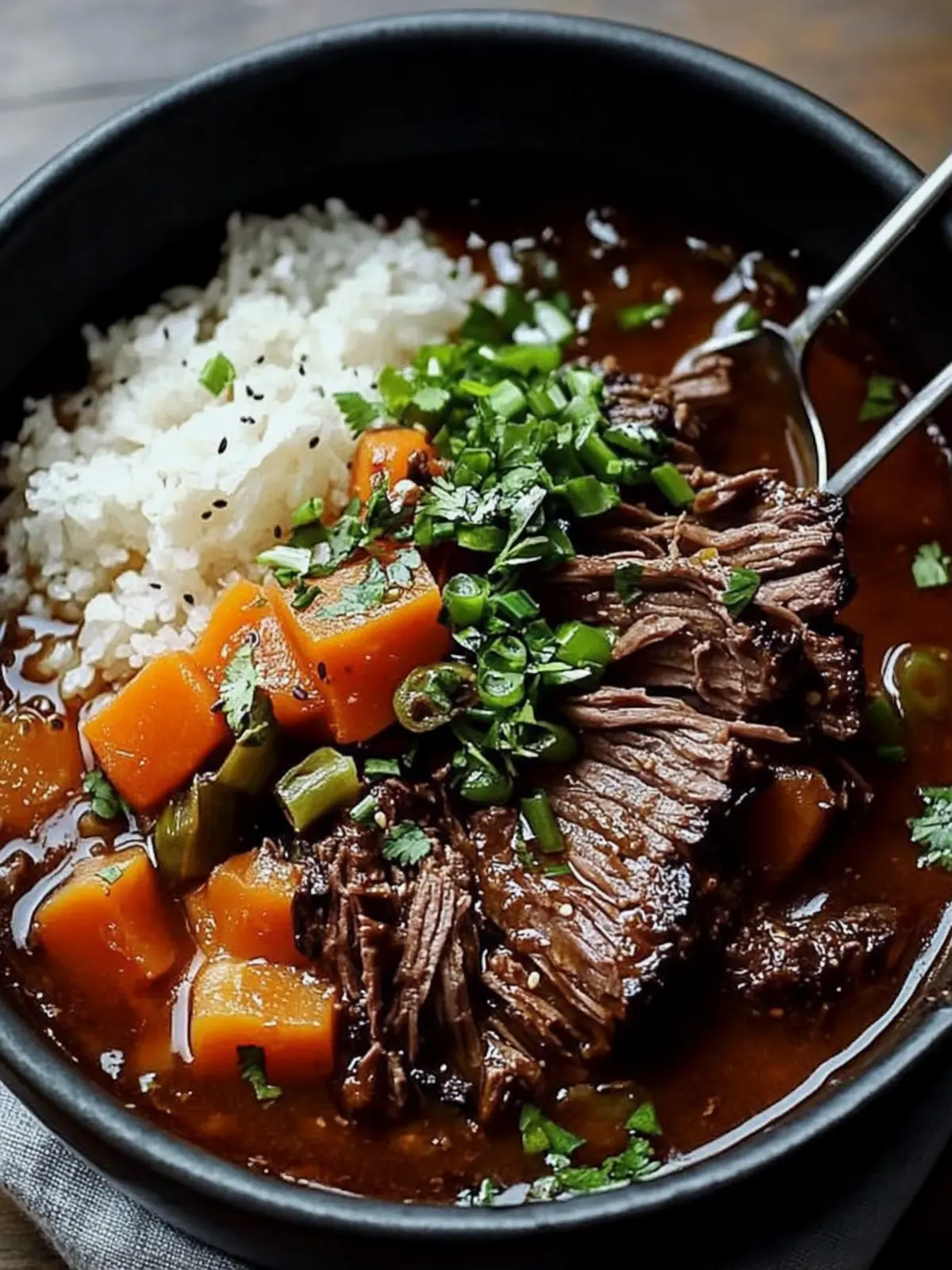
Korean Style Pot Roast Recipe FAQs
What type of beef is best for Korean Style Pot Roast?
Absolutely! Chuck roast is your best bet for this recipe due to its rich, tender texture that braises beautifully. If you can’t find one, brisket or beef shoulder are excellent substitutes that will still yield a flavorful dish.
How should I store leftovers of the Korean Style Pot Roast?
For sure! Store any leftover pot roast in an airtight container in the fridge for up to 3 days. Ensure that it’s well covered to keep it moist and flavorful when enjoyed again!
Can I freeze Korean Style Pot Roast?
Definitely! To freeze, allow the pot roast to cool completely, then wrap it tightly in plastic wrap followed by aluminum foil, keeping it airtight to prevent freezer burn. It can maintain its quality for up to 3 months. Just remember to label it with the date!
What if my pot roast isn’t tender after braising?
Very good question! If your pot roast isn’t tender after the suggested braising time, it may need more time in the oven. Check it at 30-minute intervals. The goal is for it to be fork-tender, so don’t hesitate to let it braise longer, ensuring to keep the lid on to retain moisture.
Are there any dietary considerations for the ingredients used?
Yes, it’s wise to be mindful! The Korean Style Pot Roast contains common allergens like soy from the soy sauce. If you’re serving guests, I recommend using low-sodium soy sauce to accommodate those with salt restrictions. Additionally, you can substitute gochujang with a milder sauce or omit it entirely for a non-spicy version!
How do I know if my vegetables are fresh enough to use?
Absolutely! For the best flavor and texture in your pot roast, choose vegetables that are firm and vibrant. Check for any dark spots or softness—if you see much of that, they’re better left out. Carrots should be bright orange and crunchy, while onions should be intact without sprouting. Enjoy your cooking!